
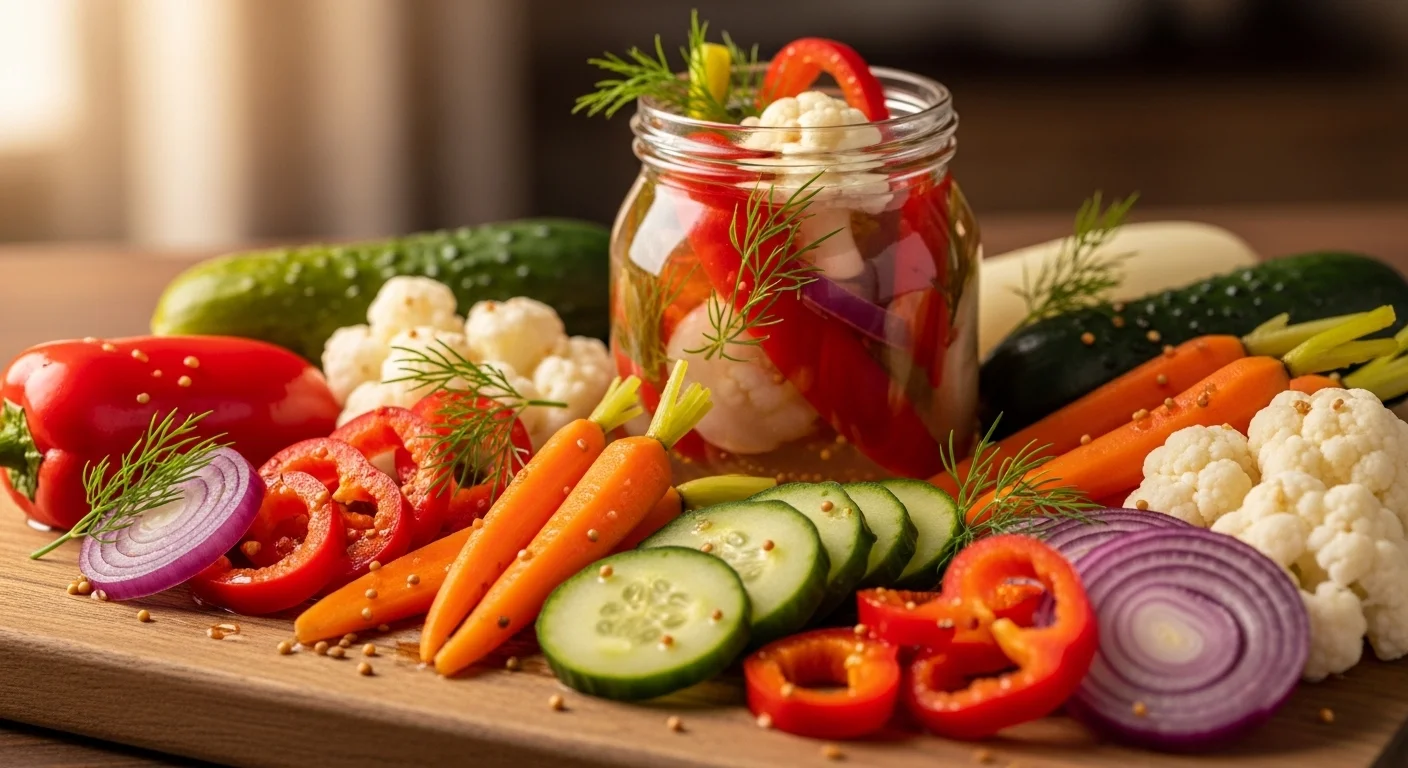
There’s something irresistibly enchanting about the crisp snap of a perfectly pickled vegetable-a harmonious burst of crunch and tang that wakes up the palate and tells a story of preservation, tradition, and flavor mastery. Pickled vegetables, long treasured across cultures and centuries, are far more than mere condiments; they are culinary alchemies where time, acidity, and artistry converge. In this article,we dive into the vibrant world of pickling, unveiling the secrets behind those tantalizing textures and zesty notes that transform humble garden harvests into unusual bites. Join us as we explore the art and science that give pickled vegetables their iconic crunch and signature tang, and discover why this timeless craft continues to captivate taste buds around the globe.
Crunchy and Tangy: The Art of Pickled Vegetables Unveiled
Crunchy and tangy pickled vegetables hold the magic of transforming the everyday into an extraordinary burst of flavor and texture. From the origins of ancient preservation techniques to today’s vibrant kitchen experiments, the key lies in understanding how to retain that satisfying snap while infusing bold acidity. Whether it’s a crisp cucumber, a tender carrot, or a pepper with a peppery bite, choosing the right vegetable and mastering the pickling process ensures every jar is a symphony of crispness and zing.
Prep and cook Time
- Preparation: 15 minutes
- Pickling Time: 24 to 48 hours (minimum)
- Total: Approximately 2 days (including resting)
yield
About 4 cups of pickled vegetables, perfect for sharing or savoring over weeks.
Difficulty Level
Easy to Medium – Ideal for home cooks eager to elevate their kitchen preserving skills without fuss.
The Science behind Perfect Crunch and Tang
Creating a crunchy and tangy experience is about the balance of vegetable selection, brine formulation, and technique.Firm vegetables with high water content like cucumbers, green beans, and radishes maintain texture when exposed to the acidity of vinegar. The magic happens thanks to calcium ions and the presence of acid, which preserve the cellular structure and inhibit enzymatic softening. For added crunch, blanching or briefly soaking vegetables in ice water before pickling tightens their cell walls, resulting in that satisfying snap.
Choosing Vegetables That Shine Through Pickling
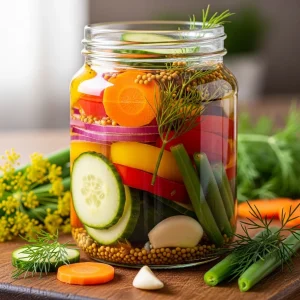
Select vegetables that stay firm under acidic conditions and have a natural, vibrant flavor. Choose organic or freshly harvested produce – younger vegetables offer a naturally sweeter base to balance tangy brine. Ideal choices include:
- Pickling cucumbers – small and dense for maximum crunch
- Carrots – sliced thin or into matchsticks
- Radishes – their peppery bite mellows beautifully
- Green beans – crisp and colorful
- Cauliflower florets – delicate but firm
- Bell peppers – sweet and crunchy, especially red and yellow
Mastering Brines for Balanced Flavors
The brine is where tang meets flavor harmony. A classic pickling brine combines vinegar (commonly white, apple cider, or rice vinegar),water, sugar, and salt. The tang results primarily from vinegar’s acidity, but balance is key, too sharp, and it overwhelms the palate; too mild, and the crunch fades.
Try this balanced brine formula to start:
- 1 cup vinegar (5% acidity)
- 1 cup water
- 1 tablespoon sugar (adjust to taste)
- 1 tablespoon kosher salt (pickling or sea salt preferred)
Heating the brine until sugar and salt dissolve ensures even flavor distribution. Aromatics like garlic, peppercorns, mustard seeds, and dill can be introduced at this stage for layers of complexity. Remember: the ratio of vinegar to water affects tang intensity, so experiment based on how tangy you want your vegetables.
Secrets to Storing and Serving Pickled Vegetables
Once pickled, proper storage is essential to retain crunch and tang. Store jars in the refrigerator for swift consumption or process in a hot-water bath for shelf stability. Let pickles rest at least 24 hours before serving to allow the flavors to harmonize and the vegetables to absorb the tang fully.
Serving ideas:
- As a vibrant snack - chilled and straight from the jar
- Garnish sandwiches and burgers – add layers of crunch and acidity that cut through richness
- In charcuterie boards – pairing perfectly with creamy cheeses and cured meats
- Topping salads or grain bowls – creating contrast to soft textures
Ingredients
- 4 cups mixed firm vegetables (cucumbers, carrots, radishes, green beans)
- 1 cup white vinegar (5% acidity)
- 1 cup water
- 1 tablespoon kosher salt
- 1 tablespoon sugar
- 4 garlic cloves, smashed
- 1 teaspoon black peppercorns
- 1 teaspoon mustard seeds
- 2 sprigs fresh dill
- 1 bay leaf
Instructions
- Prepare vegetables: Wash, trim, and slice vegetables evenly. Soak in an ice bath for 30 minutes for extra crispness.
- Make the brine: In a saucepan, combine vinegar, water, salt, and sugar. Heat gently, stirring until salt and sugar dissolve. Remove from heat.
- Pack jars: Divide garlic, peppercorns, mustard seeds, dill, and bay leaf evenly among sterilized jars. Tightly pack vegetables vertically to maximize space and even pickling.
- Pour brine: Carefully pour hot brine over vegetables, covering completely but leaving ½ inch headspace. Tap jars gently to release air bubbles.
- Seal and cool: Wipe rims clean, seal jars with lids, and let cool to room temperature.
- Refrigerate: Refrigerate jars for at least 24 hours, preferably 48, before tasting for optimal tang and crunch.
Chef’s Notes & Tips for Success
- Maintain crunch: Avoid overripe or watery vegetables; including a grape leaf or using calcium chloride (pickle crisp powder) can further enhance firmness.
- Flavor variations: Swap out dill for fresh thyme or tarragon, and add chili flakes for heat.
- Make ahead: Pickles improve with time; wait minimum two days but enjoy within one month for peak texture and taste.
- Troubleshooting: If pickles soften, your vinegar may be too mild or brine diluted; measure acidity carefully.
Serving Suggestions
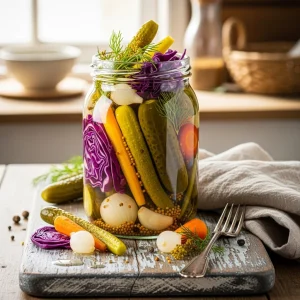
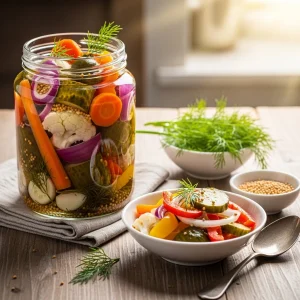
Present pickled vegetables in a clear glass jar or rustic bowl to showcase dazzling colors and varied textures. Garnish with fresh dill sprigs or a light sprinkle of toasted seeds like sesame or cumin for a final flair. Pair with creamy cheeses or alongside grilled dishes to balance smoky richness with crunchy and tangy freshness.
| Nutrient | Per Serving (1/2 cup) |
|---|---|
| Calories | 25 |
| Protein | 1 g |
| Carbohydrates | 4 g |
| Fat | 0 g |
| Sodium | 450 mg |
For more innovative vegetable preserving tips, check out our full guide on fermented vegetables. To deepen your understanding of acidity’s role in food preservation, visit this USDA resource on acidified foods.
Q&A
Q&A: Crunchy and Tangy – The Art of Pickled Vegetables Unveiled
Q1: What makes pickled vegetables so irresistibly crunchy and tangy?
A1: The magic lies in the delicate dance between vinegar or brine and fresh vegetables. The acidity of vinegar or the salinity of brine draws out moisture through osmosis, firming up the vegetable’s structure while infusing it with that signature tang. The crunch comes from the careful balance of timing and technique, too long in the brine and softness sets in; too short, and the flavors haven’t fully permeated.
Q2: Are there different styles of pickling, and how do they influence texture and flavor?
A2: Absolutely! There’s the classic vinegar pickling, which delivers a sharp acidity; fermenting with salt (lacto-fermentation), which adds a complex sourness and deeper umami; and quick pickling, where veggies soak briefly in a warm brine for immediate tang without full fermentation. Each method sculpts the crunch and tang uniquely-vinegar pickles are bright and crisp, fermented ones often develop bubbles of funk and a satisfying snap.
Q3: What vegetables make the best pickles?
A3: Think beyond cucumbers! Carrots, green beans, radishes, beets, cauliflower, and even peppers respond wonderfully. Their natural textures and flavors shine through when pickled, lending themselves to versatile crunch and interplay with spices, whether it’s dill, mustard seeds, or fiery chili flakes.
Q4: Can homemade pickling be both an art and a science?
A4: Definitely.Understanding acidity levels and salt ratios is key to safety and taste, while creativity comes in layering flavors, timing, and presentation. It’s an alchemy where precision meets experimentation-sometimes results are crisply perfect, other times pleasantly surprising with unexpected tangs and textures.
Q5: How can one add a gourmet twist to everyday pickled vegetables?
A5: Experimenting with spice blends, herbs, and even sweeteners can transform basic pickles into gourmet delights. Try star anise and cinnamon for warmth, fresh ginger for zing, or honey for a subtle sweetness. Also, consider layering pickles in dishes, on sandwiches, salads, or charcuterie boards, to awaken the palate with their lively crunch and acidity.
Q6: What’s the cultural significance behind pickled vegetables?
A6: Pickling is a universal preservation method steeped in tradition, from Korean kimchi and Indian achar to Eastern European sauerkraut. These vibrant pickles tell stories of seasonal survival, festivity, and regional spice preferences. They connect us to history while enlivening modern cuisine with their bold, crunchy personality.
Q7: How do you know when your homemade pickles are “done”?
A7: Patience is key! Typically, quick pickles begin tasting tangy in a few hours but deepen over a few days. Fermented pickles may take several weeks to develop full character. The ultimate test is the crunch and balanced acidity on your tongue, a harmonious blend that keeps you reaching back for more.
Unlocking the art of pickled vegetables invites both sensory delight and culinary adventure. With every crisp bite and tangy zip, you’re tasting centuries of craft transformed into an everyday masterpiece.
Insights and Conclusions
From the crisp snap of a well-brined cucumber to the vibrant tang that dances on your tongue, pickled vegetables are more than just preserved produce, they are a celebration of flavor, culture, and culinary craftsmanship. As we’ve uncovered the art behind these crunchy delights, it becomes clear that every jar tells a story, blending tradition with innovation, patience with spontaneity. Whether you’re a seasoned fermenter or a curious newcomer, embracing the world of pickled vegetables invites you to savor a symphony of textures and tastes that brighten any meal. So next time you reach for that jar, remember: you’re not just enjoying a snack, you’re partaking in a rich, tangy heritage that continues to evolve with every bite.