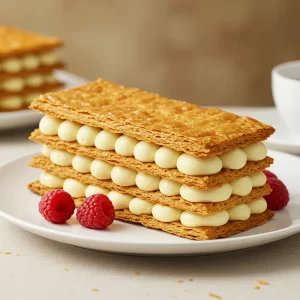

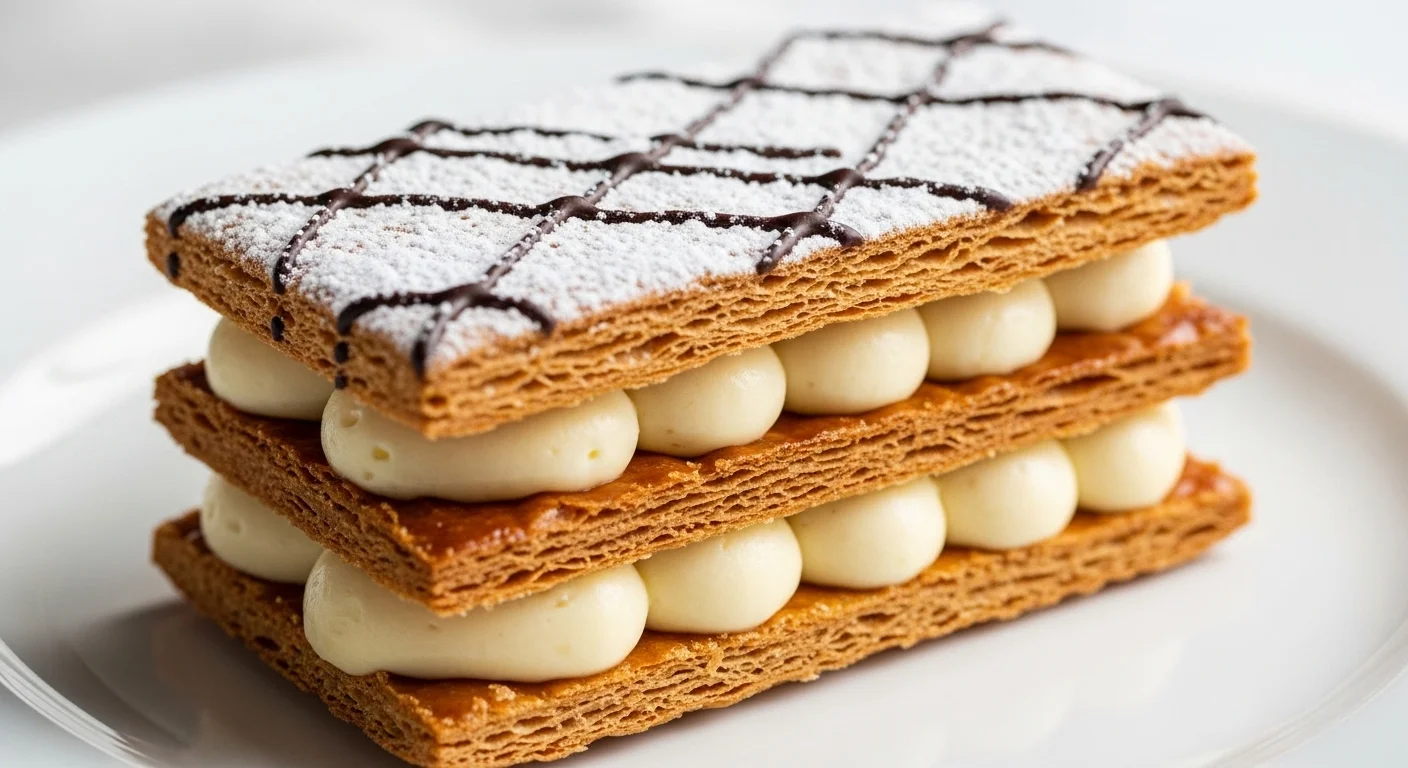
Beneath its delicate, golden crust and amidst its ethereal clouds of cream lies a story as rich and intricate as the pastry itself. Mille feuille, literally “a thousand leaves”, is more than just a dessert; it is a testament to centuries of culinary artistry and cultural evolution. This iconic French pastry, with its harmonious layers of crisp puff pastry and luscious fillings, beckons both the palate and the creativity. In exploring the art and history of Mille Feuille, we unravel the delicate layers of tradition, technique, and innovation that have transformed a simple combination of flour, butter, and cream into a timeless symbol of indulgence and elegance. Join us as we delve into the captivating journey of Mille Feuille, where each flaky layer tells a story of craftsmanship and delight.
Prep and Cook Time
- Preparation: 45 minutes
- Chilling: 2 hours
- Baking: 25 minutes
- Assembly: 15 minutes
- Total Time: Approximately 3 hours 30 minutes
Yield
Serves 8 elegantly sized portions
Difficulty level
Advanced – requires patience and precise layering but rewards with stunning visual and textural results
Ingredients
- For the Puff Pastry:
- 2 ½ cups (320g) all-purpose flour, sifted
- 1 tsp salt
- 1 cup (225g) cold unsalted butter, cubed
- ½ cup (120ml) ice-cold water
- For the Pastry Cream:
- 2 cups (480ml) whole milk
- ⅔ cup (130g) granulated sugar
- 6 large egg yolks
- ¼ cup (30g) cornstarch
- 2 tbsp unsalted butter
- 2 tsp pure vanilla extract
- For the Icing:
- 1 cup (120g) powdered sugar
- 2-3 tbsp water or lemon juice
- 2 tbsp dark chocolate, melted (optional, for marbling)
Instructions
- Prepare the Puff Pastry: combine the sifted flour and salt in a large bowl.Add the cold butter cubes and, using your fingertips or a pastry blender, work the butter into the flour until the mixture resembles coarse breadcrumbs with visible pea-sized chunks of butter.
- Add the ice-cold water gradually, mixing until the dough just comes together. Avoid overworking to keep the layers light and flaky. Shape into a rough rectangle, wrap tightly in plastic wrap, and refrigerate for at least 1 hour.
- Create the Layers: On a lightly floured surface, roll out the dough into a 12×20 inch rectangle. Fold it into thirds like a letter, wrap, and chill for 30 minutes. Repeat this rolling and folding cycle two more times, chilling between each to develop those iconic layers.
- Preheat your oven to 400°F (200°C). Roll dough to approximately 1/8 inch thick and cut into three equal rectangles for each serving. Prick all pastry layers thoroughly with a fork to prevent puffing during baking. Place on a parchment-lined baking sheet, cover with another sheet, and weigh down with baking beans or another sheet to maintain flatness.
- Bake for 20-25 minutes until golden and crisp. Remove baking beans halfway to allow edges to brown evenly. Cool wholly on wire racks.
- make the Pastry Cream: Heat the milk until it just begins to simmer. In a separate bowl, whisk egg yolks and sugar until pale and thick. Stir in cornstarch until smooth. Slowly temper the hot milk into the egg mixture, then return all to the saucepan. Cook over medium heat, whisking constantly, until thickened and bubbling. Remove from heat and stir in butter and vanilla. Cover surface with plastic wrap and chill until fully cooled.
- Assemble the Mille Feuille: Place one puff pastry layer on a serving plate. Spread an even layer of pastry cream (about ⅓ of it). Repeat layering with remaining pastry and cream, finishing with a layer of pastry on top.
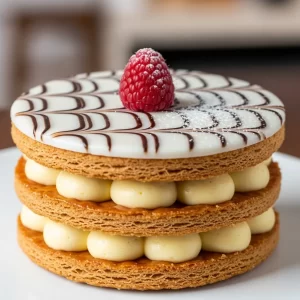
- prepare the icing: Whisk powdered sugar with just enough water or lemon juice to form a glossy, thick glaze. Spread evenly over the top pastry. Using the melted chocolate, pipe parallel lines and feather them with a toothpick for the classic marbled design.
- Chill assembled mille feuille for at least 1 hour before slicing carefully with a serrated knife to showcase the crisp layers and velvety filling.
Tips for Success
- Keep ingredients cold: Maintaining cold butter and water ensures distinct flakiness within the mille feuille’s layers.
- Don’t skip chilling steps: resting the dough between folds relaxes gluten and sharpens layers.
- Prick pastry evenly: Docking the dough prevents Billowing pockets and helps layers bake flat.
- Make pastry cream ahead: Prepare pastry cream a day before to improve flavor and set texture.
- Flavor variations: infuse pastry cream with orange blossom water, espresso, or matcha powder for unique twists.
Serving Suggestions
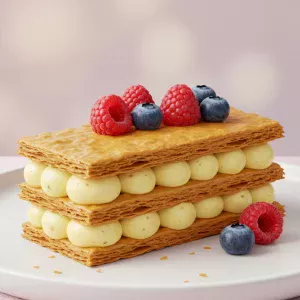
Serve mille feuille chilled and sliced into delicate rectangles. Garnish with a dusting of powdered sugar or edible flowers for an elegant touch. Pair with fresh berries or a dollop of whipped cream for added brightness. A light cup of Earl Gray or a crisp sparkling wine beautifully complements the richness of this layered delight.
| Nutrition (per serving) | Calories | Protein | Carbs | Fat |
|---|---|---|---|---|
| Mille Feuille | 410 | 6g | 45g | 22g |
For a deeper dive into classic French pastries, explore our guide to French pastry techniques. To enrich your knowledge of pastry history, the Encyclopaedia Britannica article on puff pastry offers a valuable external reference.
Q&A
Q&A: Layers of Delight – The Art and history of Mille Feuille
Q1: What is Mille Feuille, and why is it called that?
A1: Mille Feuille, literally meaning “a thousand leaves” in French, is a classic pastry characterized by its multiple thin layers of flaky puff pastry alternating with luscious cream or custard fillings. The name poetically reflects its delicate, leaf-like layers that create a symphony of textures and flavors in every bite.
Q2: How did Mille Feuille come to be?
A2: The origins of Mille Feuille trace back to 17th-century France, where chefs began experimenting with puff pastry and sweet fillings. Its evolution was influenced by the refinement of french patisserie techniques during the 18th and 19th centuries, especially under the guidance of master chefs like Marie-Antoine. What started as a simple layered dough transformed into an emblem of french culinary artistry.
Q3: what makes the puff pastry in Mille Feuille so special?
A3: The magic of Mille Feuille lies in the puff pastry-a delicate dough layered with butter,folded,and rolled repeatedly. This creates hundreds of ultra-thin sheets that “puff” into airy crispness when baked. Its buttery crunch offers a perfect counterbalance to the creamy fillings, making the pastry both light and indulgent.
Q4: What are the classic fillings and toppings used in Mille Feuille?
A4: Traditionally, Mille Feuille is filled with vanilla pastry cream or custard, sometimes lightened with whipped cream. The top is often glazed with fondant icing or dusted with powdered sugar, sometimes decorated with chocolate lines for a marbled effect. Modern variations have expanded to include fruit compotes, chocolate ganache, and even flavored creams, showcasing its versatile nature.
Q5: How has Mille Feuille influenced pastry culture globally?
A5: Mille Feuille has transcended French borders to inspire countless pastry chefs worldwide. Its layered technique has seeped into desserts ranging from layered cakes to innovative mille feuille inspired treats in Japanese and other Asian patisseries. It stands as a symbol of delicate craftsmanship, celebrating the harmony of texture and taste.
Q6: Can mille Feuille be made at home, or is it best left to professionals?
A6: While Mille Feuille is notoriously challenging, requiring patience and precision to create perfect puff pastry layers, ambitious home bakers can certainly attempt it! The key is in mastering the puff pastry dough and ensuring crisp layers that don’t become soggy. for those short on time or skill, local patisseries offer irresistible versions worthy of savoring.
Q7: What sensory experience does Mille Feuille offer to those who indulge?
A7: Eating Mille Feuille is like unraveling a delicious puzzle. Each forkful offers a delicate crunch, followed by the smooth richness of creamy fillings. The contrast between the crispy layers and silky custard invites an almost poetic delight, a dance of textures and flavors that lingers long after the last bite.
In every layer of Mille Feuille lies a story-of culinary innovation, cultural heritage, and pure pleasure. To taste it is indeed to experience an edible masterpiece where art meets history on a flaky, buttery canvas.
Final Thoughts
As the final flaky layer settles and the delicate cream melts into your senses, the mille feuille reminds us that culinary artistry is both a tribute to tradition and a canvas for innovation. From its origins in royal French patisseries to its countless modern interpretations around the world, this layered marvel continues to captivate with every bite, a testament to the timeless allure of craftsmanship and indulgence. Whether savored in a bustling café or prepared with care at home, the mille feuille remains an enduring symbol of how simple ingredients, thoughtfully combined, can create a symphony of flavor and texture that delights across generations. In peeling back each layer, we uncover not just a pastry, but a story, one of history, art, and the sweet pursuit of perfection.