
In the bustling markets of the Mediterranean, where vibrant aromas weave through sun-drenched streets, one humble yet irresistible dish has captured the hearts and palates of locals and travelers alike: lahmacun. Often dubbed the “Turkish pizza,” lahmacun is much more than a simple flatbread topped wiht minced meat; it’s a centuries-old culinary tradition that marries crispy textures with a symphony of bold, aromatic flavors. In this article, we’ll uncover the story behind lahmacun, explore it’s cultural roots, and reveal what makes this crispy delight an enduring favorite in Mediterranean cuisine.Prepare to embark on a flavorful journey that celebrates the art of simplicity and the joy of communal eating.
The Origins and Cultural Significance of Lahmacun in mediterranean Traditions
Lahmacun uncovered is a culinary journey deeply rooted in Mediterranean heritage, where this crispy, flavorful flatbread has been savored for centuries. Originating primarily from the Levant and Anatolian regions, lahmacun is more than just a dish-it’s a reflection of the rich cultural tapestry and communal dining traditions of thes lands. The word itself derives from the Arabic ‘laḥm ’ājīn’, meaning “meat with dough,” a simple yet perfect description of what awaits in every bite. Historically, it served as an accessible, hearty meal combining locally sourced meats, spices, and freshly baked dough, shared around family tables and bustling street markets alike.
As a seasoned food stylist, I recall my first encounter with lahmacun at a lively Istanbul market. The vibrant aromas of ground lamb mingled with fresh herbs and spices, sizzling over a hot stone oven, instantly drew a crowd. This moment crystallized why this dish captivates food lovers internationally-it’s an artful balance of texture and flavor, a mosaic of Mediterranean identity crafted on a thin crust. Lahmacun uncovered offers an invitation to celebrate tradition while inspiring home cooks everywhere to master its irresistible appeal.
Prep and Cook Time
- Preparation: 20 minutes
- Resting Dough: 1 hour 30 minutes
- Cooking: 8-10 minutes
- Total: Approximately 2 hours
Yield
6 servings (6 individual lahmacun, approx. 8 inches each)
Difficulty Level
Medium-requires some skill in dough handling and topping balance but accessible for adventurous home cooks.
Ingredients
-
- For the dough:
- 2 cups all-purpose flour, sifted
- 1 tsp active dry yeast
- ¾ cup warm water (about 110°F / 43°C)
- 1 tbsp olive oil
- ½ tsp sugar
- ½ tsp salt
- For the topping:
- 8 oz (225g) ground lamb or beef
- 1 medium onion, finely chopped
- 2 cloves garlic, minced
- 1 cup fresh parsley, finely chopped
- 1 small tomato, finely diced
- 2 tbsp tomato paste
- 1 tsp paprika
- ½ tsp ground cumin
- ½ tsp red chili flakes (optional)
- Salt and black pepper to taste
- 1 tbsp lemon juice
- 2 tbsp olive oil
- For garnish and serving:
- Fresh lemon wedges
- Chopped fresh parsley
- Sumac (optional)
- Pickled vegetables or fresh salad
- For the dough:
Instructions
-
-
- Activate the yeast: In a small bowl, combine warm water, sugar, and yeast.stir gently and let sit for 5-10 minutes until foamy.
- Prepare the dough: In a large mixing bowl, combine flour and salt. Make a well in the center, pour in the activated yeast mixture and olive oil. Mix with a wooden spoon until a shaggy dough forms.
- Knead: Transfer dough to a floured surface and knead for 8-10 minutes until smooth and elastic. Place in a lightly oiled bowl, cover with a damp cloth, and let rise for 1 hour or until doubled.
- Make the topping: While dough rises, combine ground meat, onion, garlic, parsley, tomato, tomato paste, olive oil, paprika, cumin, red chili, lemon juice, salt, and pepper in a bowl. Mix thoroughly-this mixture should be loose but spreadable.
- Preheat the oven: Heat your oven to the highest setting (450°F-500°F / 230°C-260°C) and place a pizza stone or heavy baking sheet inside to preheat.
- Shape the lahmacun: Divide the dough into 6 equal balls.On a lightly floured surface, roll each ball into a thin 8-inch circle. Transfer each circle onto parchment paper for easy handling.
- Add the topping: Spread 2-3 tablespoons of the meat mixture thinly and evenly over each dough circle, leaving a tiny edge around the rim.
- Bake: Using a peel or flat tray, slide the lahmacun (with parchment) onto the preheated stone/sheet.Bake for 6-8 minutes until the crust is crisp, and topping is cooked but juicy.
- Serve instantly: Garnish with fresh parsley, a light sprinkle of sumac if desired, and lemon wedges. Roll or fold and enjoy with traditional sides.
-
Tips for Success
-
-
- Dough consistency: If dough feels sticky, dust your hands and surface lightly with flour but avoid adding too much-it should be soft and pliable.
- Meat choice: Ground lamb adds authentic flavor, but a lean beef blend works well; avoid overly fatty meat to prevent soggy topping.
- Toppings: Finely chopping your herbs and vegetables ensures they meld seamlessly into the meat.
- Baking surface: Using a pizza stone replicates the traditional wood-fired oven texture by providing intense heat and even cooking.
- Make-ahead: Dough can be prepped and refrigerated overnight, allowing flavors to deepen. bring to room temperature before shaping.
-
Serving Suggestions
To elevate your lahmacun experience, serve it alongside:
-
-
- pickled turnips, cucumbers, and olives for a tangy contrast
- Fresh herb salad with mint, parsley, and sumac-dusted tomatoes
- Squeezes of lemon juice brighten each bite
- Traditional beverages: ayran (a cold yogurt drink) or a light pomegranate sherbet bring authenticity and refreshment
- Stack and roll: Roll the flatbreads up tightly with garnishes inside for an on-the-go treat
-
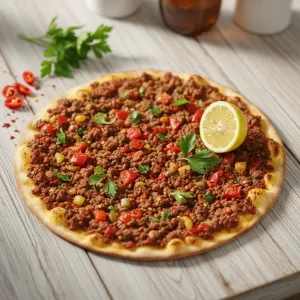
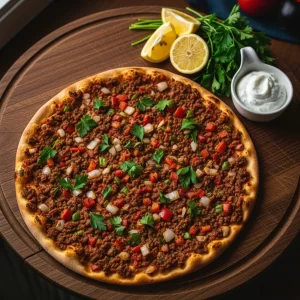
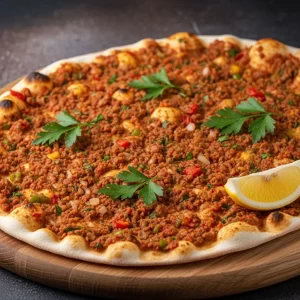
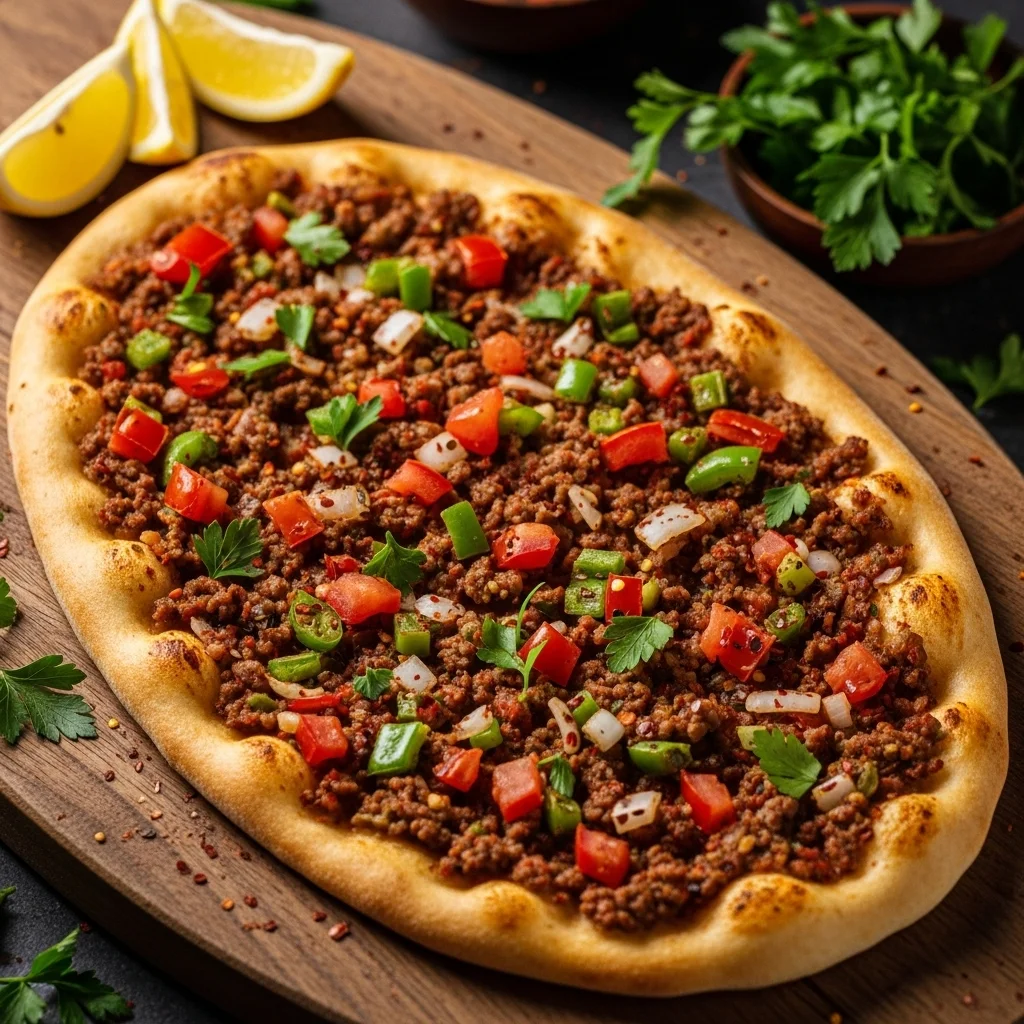
Visually, a plate of golden-edged lahmacun crowned with luminous green parsley and crimson chili flakes creates an enticing feast for the eyes and palate alike.
Nutritional Details
| Nutrient | Per Serving (1 Lahmacun) |
|---|---|
| calories | 320 kcal |
| Protein | 18 g |
| Carbohydrates | 30 g |
| Fat | 12 g |
Discover more about Mediterranean breads and flatbreads in our Mediterranean Breads Explored guide. For authentic ancient context on Levantine cuisine, you can explore resources from the Encyclopaedia Britannica.
Q&A
Q&A: Lahmacun Uncovered – The Crispy Delight of Mediterranean Cuisine
Q1: what exactly is lahmacun?
A1: Lahmacun is frequently enough described as a ”Turkish pizza,” but calling it just that doesn’t quite do it justice. It’s a thin, crispy flatbread generously topped with a zesty mixture of minced meat (usually lamb or beef), tomatoes, onions, garlic, and a vibrant blend of herbs and spices. Baked to perfection, this savory treat is both crispy and bursting with bold Mediterranean flavors.
Q2: Where did lahmacun originate?
A2: Lahmacun has deep roots across the Mediterranean and Middle Eastern regions, with a rich history that spans centuries. While it’s most strongly associated with Turkish cuisine, variations of lahmacun-like dishes can also be found in Armenia, Syria, and Lebanon. It’s truly a shared heritage that reflects the cultural melting pot of the region.
Q3: What makes the topping on lahmacun so special?
A3: The magic lies in its topping-an artful balance of finely minced meat mixed with fragrant onions, juicy tomatoes, and a secret medley of spices like cumin, paprika, and sometimes a touch of chili for heat. Fresh parsley and garlic add layers of brightness, making each bite a harmonious blend of savory, tangy, and aromatic notes.
Q4: How is lahmacun traditionally served and eaten?
A4: Lahmacun is typically served hot and fresh from the oven, accompanied by lemon wedges and a handful of fresh herbs or veggies-think parsley, sliced onions, and sometimes sumac-spiced pickles. The traditional way to enjoy it is to squeeze a bit of lemon juice over the top, then roll it up like a wrap, creating a handheld explosion of flavors and textures.
Q5: Can lahmacun be customized for different tastes?
A5: Absolutely! While the classic lahmacun topping calls for meat, vegetarians have embraced creative alternatives like spiced lentils, mushrooms, or even eggplant. The bread itself is a perfect canvas for experimentation, and modern takes often incorporate new herbs, cheeses, or unique spice blends, delighting contemporary palates while honoring tradition.Q6: What sets lahmacun apart from other Mediterranean dishes?
A6: Lahmacun’s distinct crispiness and harmonious topping make it stand out from other flatbreads or pizzas. It strikes a balance between being light yet hearty, simple yet flavor-packed. Unlike heavily sauced pizzas, lahmacun offers a fresh, bright experience that captures the essence of Mediterranean flavors in a wonderfully crunchy, foldable form.
Q7: Where can one enjoy authentic lahmacun outside the Mediterranean?
A7: Thanks to its growing popularity, lahmacun is increasingly found in Middle Eastern and Mediterranean restaurants worldwide-from bustling street food stalls in Berlin to cozy eateries in New York and london. For the adventurous, making lahmacun at home is also an enticing possibility with a little practice and the right ingredients.
Q8: Why is lahmacun considered a cultural and culinary treasure?
A8: Lahmacun is more than just food; it’s a symbol of hospitality, tradition, and communal dining.Its recipes and rituals have been passed through generations, connecting people with history and with each other. every crispy slice tells a story of ancient flavors, regional pride, and the vibrant spirit of Mediterranean cuisine.
Dive into lahmacun, and you’re not just tasting a dish-you’re savoring centuries of Mediterranean heritage, one crispy, zesty bite at a time.
In Summary
As we peel back the layers of lahmacun, this crispy Mediterranean treasure reveals more than just a meal-it tells a story of culture, tradition, and communal joy. Whether enjoyed on bustling street corners or savored in cozy kitchens, lahmacun invites us to connect with the rich tapestry of flavors and history that define this beloved dish. Next time hunger calls, consider reaching for this thin, savory delight-a simple yet profound reminder that sometimes, the most unassuming foods carry the most flavorful tales.