
In the vibrant world of Korean cuisine, every bite tells a story-rich with tradition, culture, and an unwavering devotion to flavor. Among the many culinary treasures is the humble Korean marinated egg, a seemingly simple delight that unlocks a symphony of taste with its perfect balance of savory, sweet, and umami notes. More than just a garnish or a side, these eggs are an art form, patiently steeped in a blend of soy sauce, spices, and time, transforming ordinary eggs into a luscious experience that elevates any meal. In this article, we’ll peel back the layers behind Korean marinated eggs, exploring how age-old techniques and thoughtful ingredients come together to create this iconic flavor bomb-inviting you to unlock their secrets and bring a taste of Korea to your own kitchen.
Unlocking flavor with Korean marinated eggs is a culinary adventure that beautifully marries simplicity with deep umami notes. Originating from Korea’s rich tradition of fermentation and preservation, these eggs-called mayak gyeran or “drug eggs”-have captivated food lovers worldwide by enhancing everyday dishes with their savory-sweet complexity and velvety texture. The magic lies in the marinade: a delicate balance of soy sauce, aromatics, and subtle sweetness that seeps into soft boiled eggs, transforming them into a vibrant addition to everything from ramen bowls to rice lunches.
Prep and Cook Time
- Readiness: 15 minutes
- Cooking: 10 minutes
- Marinating time: 8-12 hours (overnight preferred)
Yield
6 marinated eggs (12 halves)
Difficulty Level
Easy to Medium
Ingredients
- 6 large eggs, preferably at room temperature
- 1 cup soy sauce (use Korean soy sauce for authenticity)
- 1/2 cup water
- 2 tablespoons mirin (sweet rice wine)
- 1 tablespoon sugar
- 3 cloves garlic, thinly sliced
- 1 thumb-sized piece of ginger, peeled and sliced
- 1 small onion, quartered
- 2 dried red chili peppers (optional, for subtle heat)
- 1 scallion, chopped
Instructions
- Bring a pot of water to a rolling boil. Gently lower the eggs into the boiling water using a spoon to avoid cracking.
- Boil for exactly 7 minutes for a jammy yolk or 8 minutes for a slightly more set center. Use a timer for precision.
- Prepare an ice bath. Once cooking is complete, swiftly transfer the eggs into the ice bath to halt the cooking process and make peeling easier. Let them cool for 10 minutes.
- Peel the eggs carefully. For smooth peeling, gently tap each egg to crack, then roll it on a hard surface and peel under running water to remove thin membrane layers.
- Combine the marinade ingredients in a glass or ceramic container: soy sauce, water, mirin, sugar, garlic, ginger, onion, dried chili, and scallion.
- Stir until the sugar dissolves. Taste and adjust the balance-more sugar if you prefer sweeter eggs, or a splash more soy sauce for saltiness.
- Submerge the peeled eggs in the marinade. Make sure they are fully covered; weigh them down with a small plate if necessary.
- Refrigerate and marinate for 8-12 hours. Overnight is ideal for maximum flavor infusion.
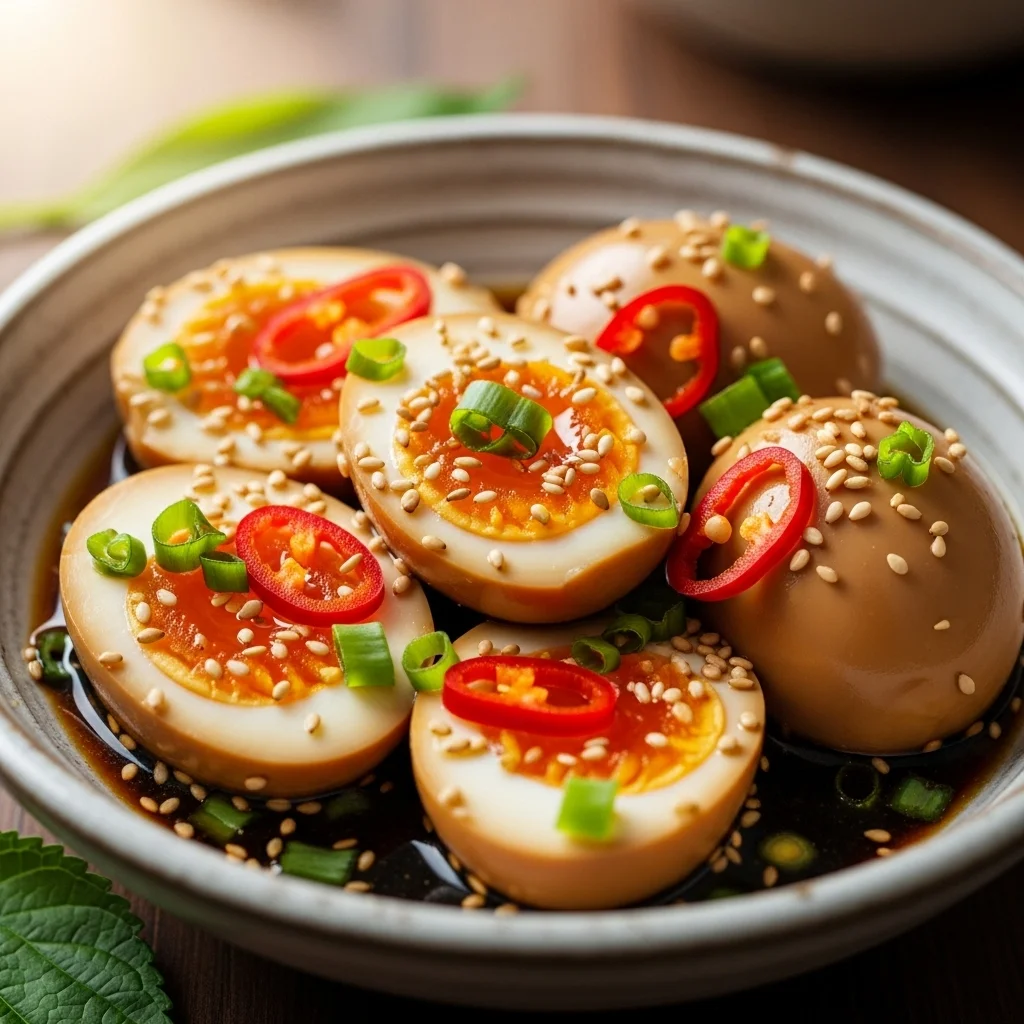
- Remove and serve. Slice eggs in half just before plating to reveal the tantalizing gradient from firm white to luscious yolk infused with rich brown hues.
Tips for Success
- Perfect timing: Consistency in boiling time is key for achieving the ideal yolk texture; overcooked yolks tend to become chalky.
- Marinating container: Use a non-reactive vessel like glass or ceramic to avoid metallic tastes.
- Flavor variations: Add star anise, cinnamon stick, or a splash of sake for an aromatic twist.
- Make ahead: These eggs can be prepared up to 3 days in advance, becoming even more flavorful as they rest.
- Substitutions: Gluten-free tamari can replace soy sauce for dietary preferences without sacrificing depth.
Creative Serving Suggestions to Elevate Your Korean Marinated Egg Experience
Beyond the classic partnership with steaming bowls of ramen, these marinated eggs shine brilliantly tossed atop bibimbap or nestled beside hearty Korean stews like kimchi jjigae. For a chic appetizer, slice and sprinkle with toasted sesame seeds and thin strips of roasted seaweed, served alongside a drizzle of sesame oil. Their glossy exterior and radiant yolk center make them a picture-perfect garnish for vibrant salads, or an indulgent snack paired with pickled vegetables and crisp rice crackers.enhance each bite with a spritz of fresh lime or a pinch of chili flakes to tantalize the palate and unlock deeper layers of flavor.
| Nutrient | Per Egg (approx.) |
|---|---|
| Calories | 70 kcal |
| Protein | 6 g |
| Carbohydrates | 2 g |
| Fat | 5 g |
for further insights into Korean culinary treasures, explore our detailed Guide to Korean Fermentation Techniques. Additionally, discover the cultural depth of Korean cuisine through research at Academic Korean Culture Institute.
Q&A
Q&A: Unlocking Flavor – The Art of korean Marinated eggs Explained
Q1: What are Korean marinated eggs, and why are they so special?
A1: Korean marinated eggs, or mayak gyeran, are soft-boiled eggs steeped in a savory, sometimes sweet and spicy soy-based marinade. They’re special because the eggs soak up a delicate balance of flavors-umami from soy sauce, sweetness from sugar or mirin, and a subtle kick from garlic or chili-resulting in a luscious bite that transforms a humble egg into a flavor bomb.
Q2: How do marinated eggs differ from regular boiled eggs?
A2: The magic lies in the marinade and the time invested. Regular boiled eggs offer a simple, clean taste. Korean marinated eggs,by contrast,are infused with a symphony of seasonings through slow absorption. The marinade seeps into the whites while leaving the yolks creamy and rich, creating a multi-dimensional experience with every slice.
Q3: What’s the secret to achieving the perfect yolk texture?
A3: Timing is everything. Typically, Korean marinated eggs sport a custard-like, slightly runny yolk.Boiling eggs for about 6-7 minutes strikes this perfect balance-firm whites enveloping a luxurious, jammy center. Cooling them immediatly in ice water stops cooking, keeping that coveted creamy texture intact.
Q4: Can the marinade be customized?
A4: Absolutely! Think of the marinade as a canvas. Traditional recipes blend soy sauce, water, sugar, garlic, and green onions, but adventurous cooks add mirin for sweetness, chili flakes for heat, or even dashes of sesame oil for nuttiness. Each tweak unlocks new layers, tailoring the eggs to your palate.
Q5: How long should the eggs marinate for optimal flavor?
A5: Patience is a virtue here. While it’s tempting to dive in, allowing the eggs to soak for at least 12 hours (often overnight) lets the flavors permeate deeply. For bolder profiles, 24 to 48 hours works wonders, but beware of over-marinating-too long can result in overly salty or firm whites.
Q6: What are some popular ways to enjoy Korean marinated eggs?
A6: These gems elevate everything from humble bowls of ramen and bibimbap to simple rice dishes. They’re also delectable as a snack or party appetizer, sliced in half to reveal their glossy, savory interiors. The rich, flavorful yolk pairs superbly with crunchy pickles, steamed veggies, or even creamy avocado.
Q7: Are Korean marinated eggs challenging to make at home?
A7: Not at all! With basic ingredients and a little foresight, anyone can master them. The process requires just boiling, cooling, and marinating-no fancy tools needed. The biggest challenge is resisting the urge to eat them all at once!
Q8: Can marinated eggs be stored safely?
A8: Yes. Keep them submerged in their marinade inside an airtight container in the fridge, where they’ll stay fresh for up to five days. The marinade acts as a flavorful preservative, but always trust your nose and taste buds to ensure freshness.
Q9: What cultural meaning do these eggs hold in Korean cuisine?
A9: Beyond their taste, marinated eggs reflect Korea’s deep appreciation for layering flavors and maximizing humble ingredients. They embody the philosophy of banchan-small, flavorful side dishes meant to complement and enhance a meal rather than overshadow it. In many Korean households, they’re a beloved staple symbolizing comfort and home-cooked care.
Q10: Any tips for beginners wanting to dive into the art of Korean marinated eggs?
A10: Start simple-perfect your boiling technique and create a classic soy-based marinade. Experiment with marinating times to find your ideal intensity. Remember,it’s an art,not science; tasting as you go and adapting is part of the fun. Soon, you’ll unlock your own signature flavor that’s uniquely yours!
In Summary
As we close the chapter on the savory world of Korean marinated eggs, it’s clear that these humble bites are anything but simple. they embody a harmonious blend of tradition, technique, and flavor-each egg a miniature masterpiece steeped in history and umami-rich magic.Whether nestled atop a steaming bowl of bibimbap or enjoyed as a standalone snack,mastering the art of these marinated gems opens a delicious portal into Korean cuisine. So next time you crave something that balances depth and subtlety, remember: unlocking the secret to korean marinated eggs is not just about a recipe, but about experiencing a vibrant culinary story, one perfectly marinated bite at a time.