
In the vibrant tapestry of Middle Eastern cuisine, few dishes encapsulate the essence of celebration, history, and communal joy quite like Egyptian Fattah. This beloved staple, with its layers of fragrant rice, tender meat, crispy bread, and rich, tangy sauces, invites curious palates on a flavorful journey through centuries of tradition.More than just a meal, Egyptian Fattah is a culinary story told at festive gatherings and family tables alike-each ingredient and technique a chapter that speaks to the heart of Egypt’s cultural heritage. Join us as we delve into the origins, ingredients, and significance of this iconic dish, uncovering the savory secrets that make Egyptian Fattah a timeless symbol of hospitality and history.
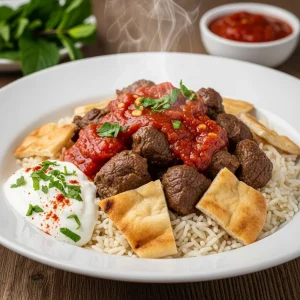
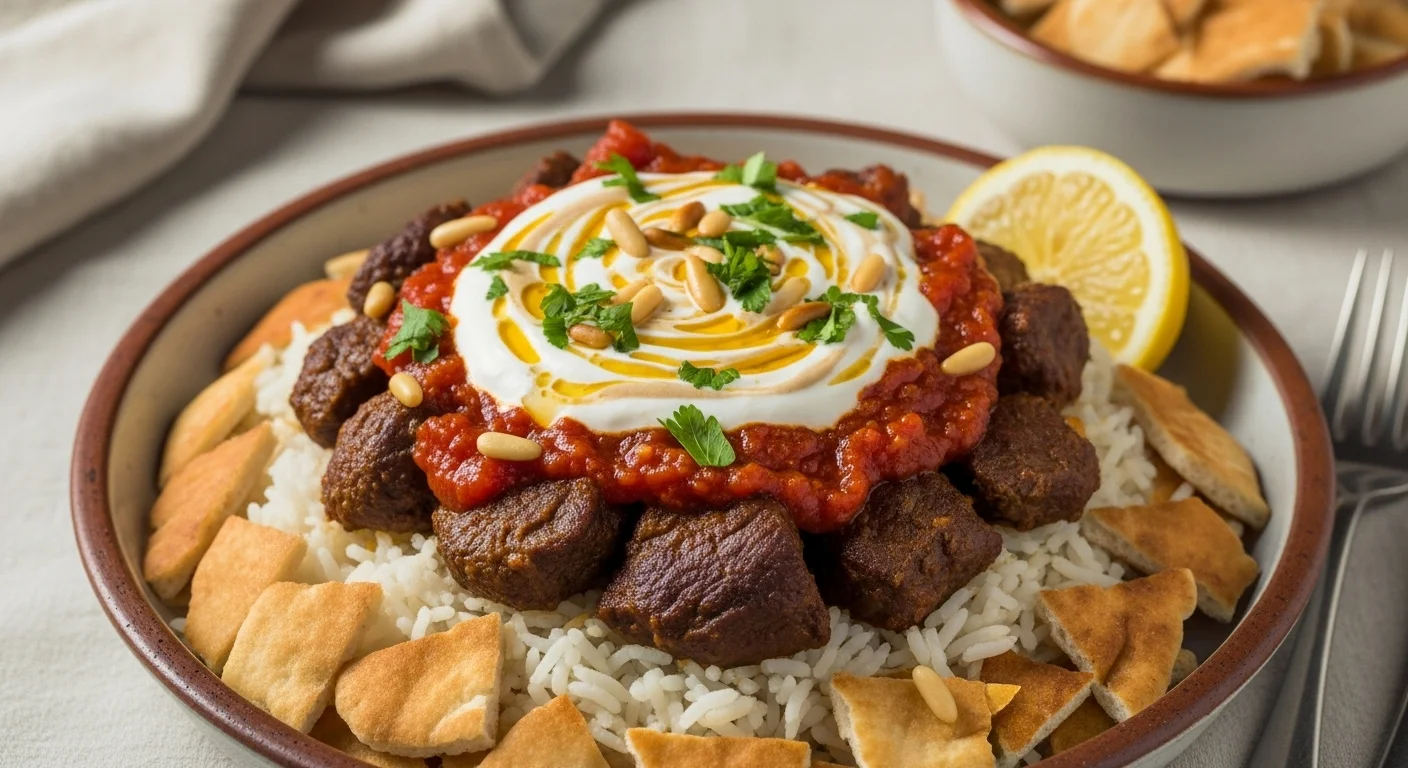
Egyptian Fattah is a culinary treasure that embodies the rich tapestry of Egypt’s heritage and hospitality. This beloved dish, rooted deeply in traditions dating back centuries, marries layers of fragrant rice, crunchy toasted bread, tender meat, and flavorful garlic tomato sauce in a harmony that’s as visually stunning as it is mouthwatering. My first encounter with Egyptian Fattah was during a vibrant family gathering in Cairo, where each bite revealed stories of celebration, unity, and ancestral pride. Cooking this iconic dish is more than just a recipe-it’s an invitation to experience the soul of Egyptian culture through food.
Prep and Cook Time
- Preparation: 25 minutes
- Cooking: 1 hour 30 minutes
- Total: 1 hour 55 minutes
Yield
- serves 6-8 hearty portions
difficulty Level
- Medium
Ingredients
- 4 cups basmati rice, rinsed and soaked for 30 minutes
- 4 large Arabic flatbreads (baladi bread), cut into bite-sized pieces
- 2 lbs beef shank or lamb shoulder, cut into chunks
- 1 large onion, quartered
- 4 garlic cloves, minced
- 3 tbsp tomato paste
- 6 cups beef broth or water
- 1 tsp ground cumin
- 1 tsp ground cinnamon
- Salt and black pepper to taste
- 1/4 cup white vinegar
- 1/4 cup unsalted butter or ghee
- Chopped fresh parsley for garnish
- Toasted pine nuts or slivered almonds (optional, for garnish)
- Yogurt or tahini sauce to serve (optional but recommended)
Instructions
- Prepare the Meat Broth: In a large heavy-bottomed pot, add beef chunks, quartered onion, salt, pepper, and enough water to cover. Bring to a boil, reduce heat, and simmer gently for 1 to 1 ½ hours until the meat is tender. Skim off any foam to keep the broth clear.
- Toast the bread: While the meat cooks, preheat the oven to 350°F (175°C). Spread the cut flatbread pieces on a baking sheet and bake for 10 minutes or until crispy and golden. Set aside.
- Cook the Rice: Drain the soaked rice. In a separate pot, melt 2 tablespoons of butter or ghee. Add rinsed rice and sauté gently for 2 minutes. Add 4 cups of the beef broth, salt, cumin, and cinnamon. Bring to a boil, then cover and reduce heat to low. Cook for 18-20 minutes until rice is fluffy and liquid absorbed.
- make the Tomato Garlic Sauce: In a skillet, melt remaining butter over medium heat. Sauté minced garlic until fragrant and lightly golden, about 2 minutes. Stir in tomato paste, cook for 3 minutes, then add ½ cup of beef broth and vinegar. Simmer for 5 minutes, adjusting seasoning as needed.
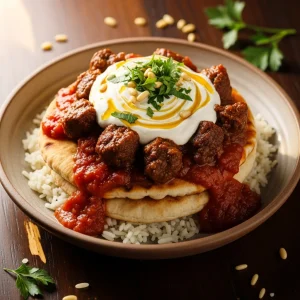
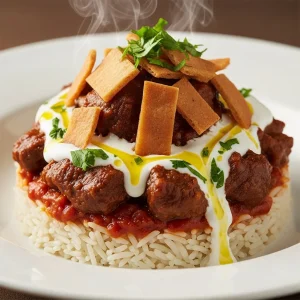
- Assemble the Fattah Layers: In a large serving dish, spread the toasted bread as the base layer. Top with the cooked rice evenly. Gently place tender meat chunks on top.
- Pour the Sauce: Drizzle the savory tomato garlic sauce generously over the layered dish, ensuring every bite will have a burst of flavor and a slight tang from the vinegar.
- Garnish and Serve: Sprinkle chopped parsley and toasted pine nuts or slivered almonds on top. Serve immediately with optional sides of yogurt or tahini sauce to mellow the acidity and add creaminess.
Tips for success
- Choose the right bread: Egyptian baladi bread is essential for authenticity due to its perfect chewiness and ability to soak up the sauce without disintegrating.
- Meat alternatives: For a lighter version, substitute beef with shredded chicken or lamb. Slow-cook thoroughly to preserve tenderness.
- Vinegar balance: The vinegar in the sauce is crucial for authentic flavor. Adjust carefully-start with less and add more if desired.
- Make ahead: You can prepare the meat broth and rice a day in advance.Store separately and assemble just before serving for fresher textures.
- Adding depth: A pinch of ground allspice or nutmeg can elevate the rice’s aroma subtly without overpowering.
Serving Suggestions
Serve Egyptian Fattah steaming hot in a large, shallow dish to showcase its layered beauty. Pair with crisp green salad dressed lemony vinaigrette to cut through the richness. For an extra indulgent experience, accompany with a bowl of chilled laban (yogurt drink) or a radiant cucumber and mint raita. Garnishing with fresh herbs and toasted nuts not only adds vibrant color, but also delightful crunch that contrasts the soft rice and tender meat. Encourage guests to mix the layers gently at the table to blend textures and flavors before each bite.
| Nutrition per Serving | Calories | Protein | carbs | Fat |
|---|---|---|---|---|
| Egyptian Fattah | 480 | 32g | 45g | 15g |
Discover more about customary Middle Eastern dishes by exploring our authentic Egyptian Koshari recipe-another cultural gem that beautifully complements fattah’s richness.
Learn the history and depth of Egyptian cuisine at Encyclopedia Britannica.
Q&A
Q&A: Egyptian Fattah – A Flavorful Journey Through Tradition
Q1: What is Egyptian Fattah?
A1: Egyptian Fattah is a hearty, celebratory dish that embodies centuries of culinary heritage. Traditionally served during festive occasions like Eid and family gatherings, it combines layers of toasted bread, aromatic rice, tender meat, and a tangy garlic vinegar sauce. Each bite is a harmonious blend of textures and flavors that tells a story of Egypt’s rich cultural tapestry.
Q2: How did Fattah originate in Egyptian cuisine?
A2: The origins of Fattah trace back to ancient Egypt, where bread and meat were staples of the diet. Over time, this practical combination evolved into a layered dish symbolizing generosity and togetherness.Historically, Fattah was crafted for celebrations, where families would come together to share the nourishing meal, making it both a culinary delight and a social ritual.
Q3: What are the key ingredients that make Fattah unique?
A3: The soul of Egyptian Fattah lies in its simplicity and balance. The foundational ingredients include crispy, toasted flatbread (usually aish baladi), fluffy white rice, slow-cooked beef or lamb, and a potent tomato and garlic vinegar sauce. The interplay between the crispy bread, soft rice, and savory meat drenched in tangy sauce creates a symphony of flavors that is both comforting and exciting.
Q4: How is Fattah traditionally prepared?
A4: Traditional preparation involves layering: first comes the crunchy bread soaked slightly in broth, followed by a generous mound of fragrant rice. The meat, often cooked until it melts off the bone, crowns the dish. a savory tomato-garlic vinegar sauce is drizzled over the top.The magic happens when all these components meld together, inviting diners to enjoy each layer individually or mixed, making every forkful a unique experience.
Q5: Are there regional variations of Fattah within Egypt?
A5: Absolutely! While the core concept remains consistent, northern regions might emphasize more tomato in the sauce, lending it a sweeter profile, whereas southern variations often incorporate additional spices or use different cuts of meat, such as lamb shoulder. Some families add a dollop of strained yogurt or a sprinkle of nuts to elevate texture and taste, showcasing the dish’s versatility.
Q6: Why is Fattah considered a dish of celebration?
A6: Beyond its appetizing flavors, Fattah represents communal spirit and gratitude. Traditionally reserved for major holidays and special occasions,it’s served in large platters meant to be shared. Preparing Fattah is often a collective effort, reinforcing bonds among family and friends. Its richness symbolizes abundance,making it a fitting centerpiece for joyous moments.
Q7: Can Fattah be adapted for modern or dietary preferences?
A7: Certainly. While traditional Fattah shines with meat, modern cooks have reimagined it using chicken, beef alternatives, or even vegetarian options featuring mushrooms or legumes.Bread choices can vary, and sauces can be tweaked for lower acidity or spice levels. The essence of fattah, layering and blending textures, allows for creative adaptations without losing its authentic charm.
Q8: what tips would you give someone trying Fattah for the first time?
A8: approach Fattah with an open palate and a willingness to explore its layers. Don’t be shy to mix the bread, rice, meat, and sauce together-it’s meant to be a fusion of flavors and textures. If making it at home, balance the acidity of the vinegar sauce carefully, and ensure the bread is crisp but not burnt. Most importantly, enjoy the dish as a communal experience, savoring not just the taste but the tradition it carries.
Embarking on a flavorful journey through Egyptian Fattah is more than tasting a dish; it’s participating in a timeless tradition that celebrates history, hospitality, and the joy of shared meals. Whether on a festive table or at a cozy family dinner, Fattah invites you to discover the heart of Egyptian cuisine-one delicious layer at a time.
Closing Remarks
As the richly layered plates of Egyptian Fattah reveal their mosaic of flavors, textures, and history, we are reminded that this dish is far more than just a meal-it is a vibrant tapestry woven from centuries of tradition, culture, and communal celebration. Each bite tells a story of resilience and hospitality, inviting us to savor the heart of Egypt’s culinary heritage. Whether enjoyed during festive gatherings or as a comforting family favorite, Fattah stands as a delicious testament to the enduring spirit of a nation and its timeless connection to food. So next time you find yourself yearning for a taste of history, let Egyptian Fattah take you on a flavorful journey you won’t soon forget.